
Why Is My Dog Aggressive?
If you're asking, "Why is my dog aggressive?", there isn't always one simple answer. Aggression describes a behaviour rather than a personality trait, and identifying what triggers it is an important first step.
Possible causes include:
- Fear or anxiety
- Pain or illness
- Resource guarding
- Territorial behaviour
- Frustration
- Previous negative experiences
- Lack of socialisation
- Feeling trapped or threatened
For example, a nervous dog may growl when an unfamiliar person approaches because they want more distance. Another dog might guard food because they are worried it will be taken away.
Learning to recognise your dog's communication can make these situations easier to understand. Read more about your dog's body language here.
You can also explore the hidden meaning behind common dog behaviours here.
Early Warning Signs of Dog Aggression
A bite is rarely the first sign that a dog is uncomfortable. Dogs often communicate stress through much smaller behaviours first.
Early warning signs may include:
- Turning or moving away
- Lip licking
- Yawning when not tired
- Showing the whites of the eyes
- Becoming suddenly still
- Tucking the tail
- Flattening the ears
- Stiffening the body
- Growling
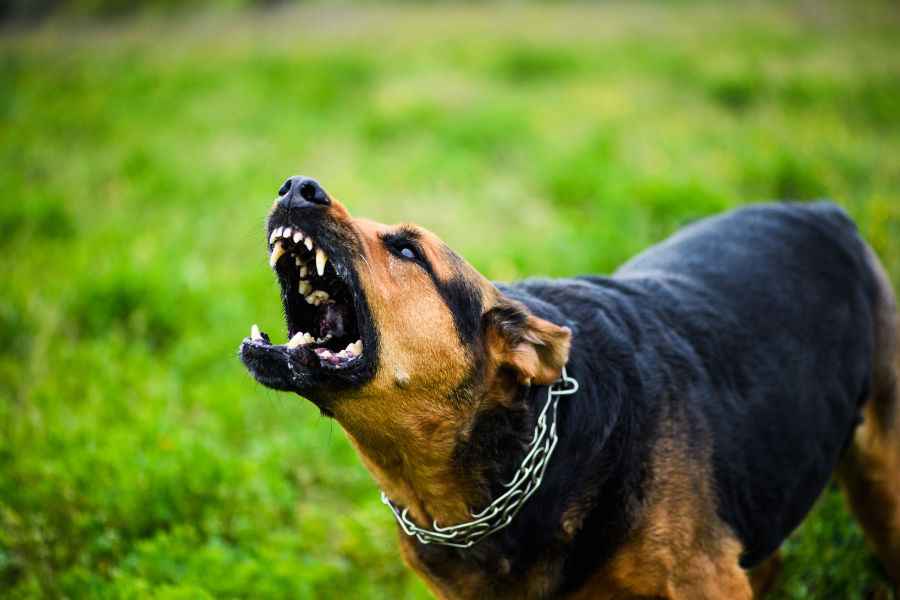
- Showing teeth
- Barking or lunging
Recognising these signals gives owners an opportunity to create distance and reduce pressure before the situation escalates.
Growling, in particular, shouldn't automatically be punished. It is valuable communication that tells you your dog is uncomfortable.
Fear, Stress and Anxiety
Fear is a common reason behind aggressive behaviour.
Dogs may react defensively when they encounter unfamiliar people, dogs, sounds or situations. If they feel they cannot move away, barking, growling or lunging may become their way of creating distance.
Dogs experiencing ongoing anxiety may also have a lower threshold for stressful situations.
Learn more about dog anxiety here.
If fear appears to be contributing to your dog's behaviour, this guide may also help.
Dog Aggression Towards Other Dogs
Dog aggression towards other dogs can happen for many reasons, including fear, frustration, poor previous experiences or discomfort with certain types of interaction.
Owners searching for how to stop dog aggression towards other dogs may understandably want a quick solution, but there isn't one method that works for every dog.
A safer approach is to identify:
- Which dogs trigger the reaction
- How close another dog can get before your dog becomes uncomfortable
- Whether the behaviour happens mainly on or off lead
- Whether particular environments make reactions worse
Creating more distance from triggers can help prevent your dog from becoming overwhelmed.
If you're wondering how to stop dog to dog aggression, gradual behaviour work with a qualified professional is often more effective than repeatedly placing the dog in stressful situations.
Dog Aggression Towards People
Dog aggression towards people should always be approached carefully.
Some dogs may react to strangers, while others are uncomfortable with particular interactions such as being hugged, handled or approached while eating.
Rather than forcing interaction, give your dog space and avoid situations that repeatedly trigger the behaviour while you seek appropriate advice.
Children should always be supervised around dogs, particularly when there is a known history of uncomfortable or defensive behaviour.
For more information about reducing risks around dogs, read.
Resource Guarding
Some dogs become protective of things they value, including:
- Food
- Toys
- Beds
- Chews
- People
This is known as resource guarding.
Trying to forcibly remove an item can increase tension and may make guarding worse. Instead, management and reward-based training can help dogs learn that people approaching their resources doesn't necessarily mean losing them.
Pet-n-Sur's guide to positive reinforcement explains how rewarding desired behaviour can support training.
What About Puppy Aggression?
Puppy aggression can sometimes be confused with normal puppy behaviour.
Young dogs naturally explore the world through play, which can include mouthing, chasing, growling and wrestling. However, repeated intense reactions, resource guarding or behaviour that appears driven by fear should not simply be ignored.
Early socialisation and positive training can help puppies develop confidence and appropriate ways to interact.
Learn more about socialising your dog here.
For basic training advice, visit here.
Could Pain Be Causing Aggression?
A sudden change in behaviour deserves attention, particularly if your dog has never previously shown aggression.
Pain can make even a normally relaxed dog more sensitive to touch or interaction.
Possible causes include:
- Joint or back pain
- Dental problems
- Ear infections
- Injuries
- Skin irritation
- Other illnesses
If aggression appears suddenly or your dog also shows changes in appetite, movement, sleep or energy, arrange a veterinary check.
Learn about subtle signs of discomfort here.
What Should You Do When Your Dog Shows Aggression?
Safety should come first. Avoid shouting, hitting or physically confronting your dog, as punishment can increase fear and may make future reactions harder to predict.
Instead:
- Create distance from the trigger
- Stay calm
- Avoid forcing interactions
- Use barriers or leads where appropriate
- Keep children and other animals safe
- Note what happened immediately before the behaviour
Keeping a simple record can help identify patterns and provide useful information for your vet or trainer.
When Is Dog Aggression Training Needed?
Professional dog aggression training may be helpful when reactions are frequent, worsening or creating safety concerns.
Start with your veterinarian if the behaviour is new or unexplained so that medical causes can be considered.
A qualified behaviour professional or experienced reward-based trainer can then help identify triggers and develop an individual management and training plan.
The goal shouldn't simply be to stop growling or barking. Good behavioural support looks at why the behaviour is happening and helps the dog feel safer and respond differently over time.
Can Dog Aggression Be Prevented?
Not every behaviour problem can be prevented, but early socialisation, positive training and good management can help.
Owners can support their dogs by providing:
- Positive experiences from an early age
- Appropriate exercise and enrichment
- Consistent routines
- Respect for personal space
- Regular veterinary care
- Early support when behaviour changes
Responsible ownership also means planning for the unexpected, whether that's a sudden health problem, injury or behavioural concern.
At Pet-n-Sur, we believe understanding your dog's physical and emotional wellbeing is an important part of responsible care. Being observant, seeking help early and having a plan for unexpected veterinary needs can help owners make calmer, more informed decisions.
Learn more about Pet-n-Sur dog insurance here.