

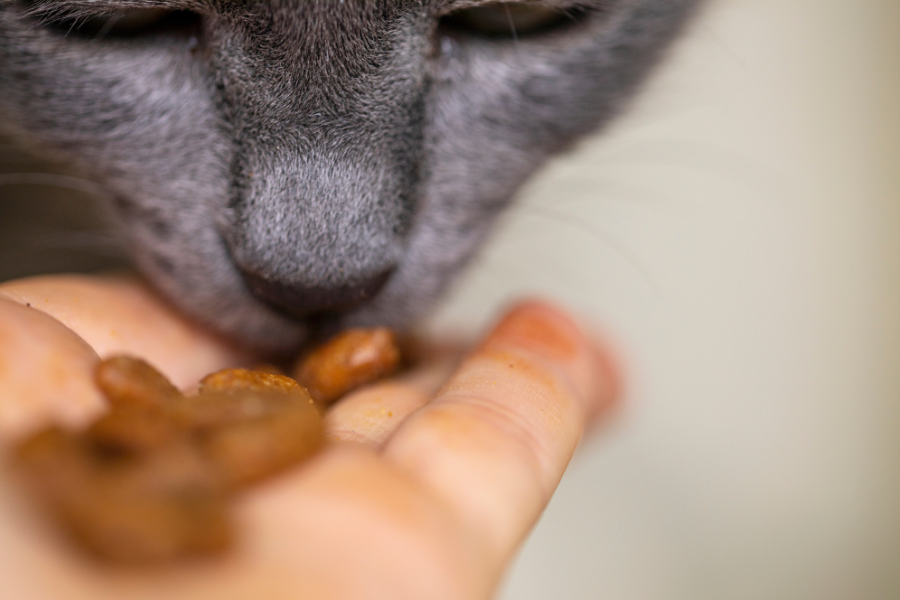
How Often Should Cats Eat?
There is no universal answer to how often should cats eat, but most healthy adult cats do well with two meals a day.
Some cats prefer smaller, more frequent meals, while others are perfectly happy eating breakfast and dinner.
The best feeding routine is one that:
- Meets your cat's nutritional needs
- Helps maintain a healthy body weight
- Fits your daily routine
- Is easy to keep consistent
Cats generally thrive on routine, so feeding at similar times each day can help them feel secure and may reduce food-related stress.
Feeding Kittens
Kittens have very different nutritional needs from adult cats.
Because they are growing rapidly, they need more energy and should usually eat several smaller meals throughout the day.
As a general guide:
- Young kittens often need 4–6 meals daily.
- Older kittens may gradually transition to 3 meals a day.
- By around 12 months of age, many cats can move to an adult feeding routine.
Your veterinarian can help recommend a feeding schedule based on your kitten's age and growth.
If you're looking for more nutrition advice, Pet-n-Sur's guide to cat diet is a helpful resource.
Feeding Adult Cats
For most healthy adult cats, two meals each day provide a simple and consistent routine.
However, there are situations where different schedules may work better.
Some owners choose to:
- Feed two larger meals
- Offer three smaller meals
- Use automatic feeders while at work
- Divide daily food into several portions
There isn't necessarily a right or wrong approach, provided your cat receives the correct daily amount of food.
Consistency is often more important than the exact number of meals.
Feeding Senior Cats
As cats age, their nutritional needs may change.
Some senior cats:
- Eat smaller meals more comfortably
- Require special veterinary diets
- Have dental issues affecting chewing
- Experience changes in appetite
Regular health checks become increasingly important as cats grow older, helping identify any conditions that could affect eating habits.
Learn more about your cat's annual check-up here.
How Much Food Should a Cat Eat?
Another common question is how much food should a cat eat?
Like feeding frequency, there is no single answer.
The right amount depends on factors such as:
- Age
- Weight
- Body condition
- Activity level
- Indoor or outdoor lifestyle
- Overall health
- Type of food being fed
For example, an active young cat may require more calories than an older indoor cat.
The feeding guide on your cat food packaging provides a useful starting point, but these recommendations are averages and may need adjustment for individual pets.
If you're unsure, your veterinarian can help determine the right daily intake for your cat.
Wet Food, Dry Food or Both?
Many owners wonder whether wet or dry food affects a cat feeding schedule.
Both can be appropriate when they provide complete and balanced nutrition.
Some owners feed:
- Dry food only
- Wet food only
- A combination of both
Wet food contributes additional moisture to the diet, while dry food is often convenient for portioning and storage.
The best option depends on your cat's preferences, health and lifestyle.
Learn more about wet or dry food for cats here.
Should You Leave Food Out All Day?
Free-feeding, where food is available throughout the day, works well for some cats but not others.
Some cats naturally regulate their intake, while others may overeat if food is constantly available.
If your cat tends to gain weight easily, measured meals may make it easier to monitor portions.
Scheduled feeding also helps owners notice changes in appetite sooner, which can sometimes be an early sign of illness.
Pet-n-Sur's guide to the best feeding method for cats explores different feeding approaches in more detail.
Watch Your Cat, Not Just the Bowl
Every cat is different.
Rather than focusing only on how often your cat eats, pay attention to how they are responding to their feeding routine.
Signs that your current schedule may be working well include:
- Maintaining a healthy weight
- Good energy levels
- A healthy coat
- Consistent appetite
- Normal toileting habits
On the other hand, persistent hunger, unexpected weight changes or sudden changes in appetite are worth discussing with your veterinarian.
Portion Control Matters
Even when feeding high-quality food, portion sizes are important.
Overfeeding can contribute to obesity, while underfeeding may leave cats lacking essential nutrients.
Using a measuring cup or kitchen scale can help keep portions consistent.
Regular body condition checks are also useful.
If you're unsure whether your cat is at a healthy weight, Pet-n-Sur's guide to overweight cats offers practical advice.
Routine Supports Long-Term Health
Cats generally appreciate predictable routines.
Feeding at similar times each day can:
- Reduce stress
- Help regulate appetite
- Make changes in eating habits easier to notice
- Support healthy digestion
Routine extends beyond feeding as well.
Changes in sleeping, activity or appetite can sometimes indicate underlying health concerns.
Learn more about cat sleep patterns here.
When Should You Adjust Your Cat's Feeding Schedule?
It's perfectly normal for feeding routines to change throughout your cat's life.
You may need to adjust your cat feeding schedule if:
- They become more or less active
- Their weight changes
- They develop a medical condition
- Your work routine changes
- Your veterinarian recommends a different diet
- They move from kittenhood into adulthood
Making gradual adjustments often allows cats to adapt more comfortably than sudden changes.
Nutrition Is Part of Preventative Care
Good nutrition is one of the simplest ways to support your cat's long-term health.
A balanced diet, sensible portion control and a consistent feeding routine all contribute to maintaining a healthy weight and supporting overall wellbeing.
Planning ahead for your cat's future health is another important part of responsible ownership.
Learn more about insuring your cat from a young age here.
Finding the Routine That Works for Your Cat
So, how often should you feed a cat? The answer depends on your individual cat.
Age, weight, health, lifestyle and food type all influence how often cats should eat and how much food they need each day.
Rather than aiming for a perfect schedule, focus on consistency, appropriate portions and paying attention to your cat's individual needs. Regular observation and routine veterinary care can help you make adjustments as your cat grows and changes.
At Pet-n-Sur, we believe everyday habits like good nutrition and preventative care play an important role in helping cats live long, healthy lives.
Learn more about Pet-n-Sur cat insurance here.