

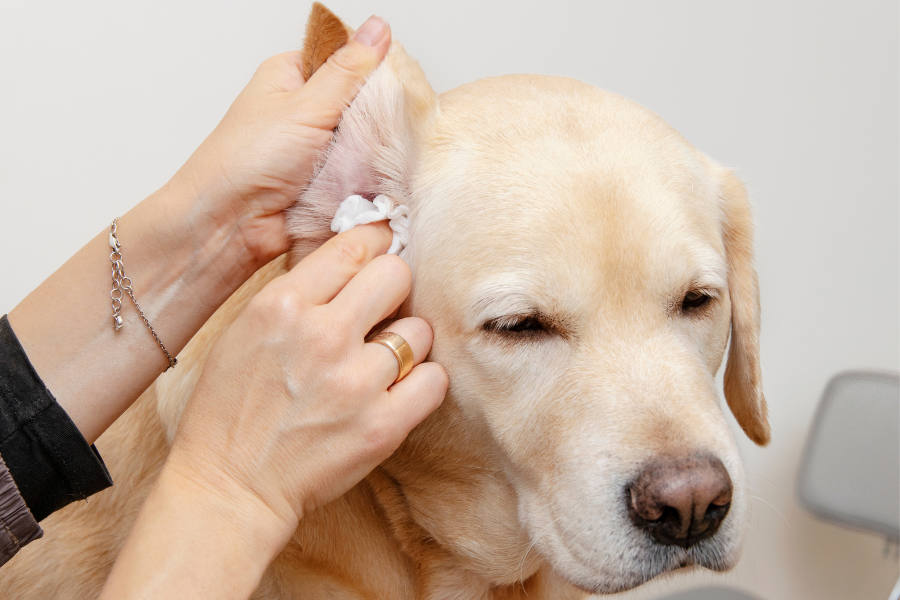
Understanding Ear Infections in Dogs (Otitis Externa)
The medical term for outer ear infection is otitis externa, a condition that affects the external ear canal. When left untreated, it can spread deeper into the middle and inner ear (otitis media or interna), potentially causing hearing loss or balance issues.
Canine otitis externa is extremely common, particularly in breeds with floppy ears or those that love swimming — as trapped moisture creates the perfect environment for bacteria and yeast to thrive.
What Causes Ear Infections in Dogs?
There are several common triggers behind dogs’ ear infections, each linked to environmental, behavioral, or genetic factors.
1. Moisture and Swimming
Dogs that swim frequently or get bathed often may retain moisture in the ear canal. This trapped dampness creates a breeding ground for dog yeast infection ear problems. Breeds like Retrievers, Spaniels, and Poodles are especially prone to these moisture-related infections.
2. Allergies
Just like skin allergies, food sensitivities or environmental triggers can cause inflammation that extends into the ear canal. Dogs with spring allergies or chronic skin irritation often experience recurring ear issues.
3. Ear Mites
Microscopic parasites can cause intense itching and irritation, particularly in puppies. Dog ear mite medication is usually required for treatment and prevention. Puppies suffering from a puppy ear yeast infection or mite infestation may develop crusty debris or black discharge.
4. Bacteria and Yeast
Bacteria and yeast naturally live on your dog’s skin and in their ears, but when the balance is disrupted (by moisture, wax, or allergies), infection follows. Dog yeast infection ear cases can produce a strong, musty smell and discharge that needs veterinary care.
5. Foreign Bodies and Trauma
Seeds, grass awns, or excess cleaning can irritate the ear canal. Some dogs scratch excessively or shake their heads, worsening inflammation and even causing hematomas.
Recognising the Symptoms
Because ear infections can quickly escalate, early recognition is key. Common symptoms include:
- Persistent scratching or pawing at the ears
- Head shaking or tilting
- Redness, swelling, or scabs around the ear
- Brown, yellow, or black discharge
- Foul dog ear odor
- Whimpering or avoiding touch near the ear
- Loss of balance or disorientation (in severe cases)
If your dog shows these signs, see a vet promptly. Minor infections are often easy to treat — but if ignored, they can lead to chronic otitis externa in dogs, scarring, and hearing damage.
Diagnosing and Treating Dog Ear Infections
When you visit a vet for a dog ear infection treatment, they’ll usually start by examining the ear canal with an otoscope and may take a sample of debris to identify bacteria, yeast, or mites. Tests might include:
- Cytology (microscopic examination)
- Culture and sensitivity tests
- Allergy testing (for recurrent cases)
Treatment depends on the cause and severity. Options include:
- Ear cleaning and drying solutions – to remove debris and moisture.
- Topical medications – antifungal or antibacterial ear drops.
- Antibiotics for dog ear infection – for bacterial cases confirmed by lab tests.
- Anti-inflammatory drugs – to relieve pain and swelling.
- Dog ear mite medication – to eliminate parasites and prevent recurrence.
For dogs with recurrent or chronic issues, managing underlying allergies or environmental factors is essential. In more severe otitis externa dog cases, surgery may even be required to open or clean the ear canal.
Why Some Dogs Are More Prone to Ear Infections
Certain breeds are more likely to suffer from canine otitis externa because of their anatomy and lifestyle. Examples include:
- Cocker Spaniels – Narrow ear canals and excessive wax buildup.
- Labrador & Golden Retrievers – Frequent swimmers, high moisture exposure.
- French Bulldogs & Pugs – Allergic skin and ear inflammation.
- Basset Hounds – Heavy ear flaps trap heat and moisture.
- Poodles – Hair growth in ear canals blocks ventilation.
Regular ear checks and cleaning routines can significantly reduce infection risk, especially for these breeds.
The Financial Side: Vet Bills and Treatment Costs
Ear infections can add up quickly — especially when they become chronic. A basic veterinary consultation for an ear issue typically costs between $80 and $120. If diagnostic tests like cytology or bacterial cultures are needed, expect another $100 to $250 on top.
Treatment medications — including antibiotics, antifungal drops, or anti-inflammatory drugs — can cost $50 to $200, depending on severity and duration. Chronic or recurring cases might require ongoing allergy testing, ear cleaning solutions, and prescription medications, which can raise total expenses to $800 or more per year.
When you consider how common these infections are, it’s easy to see why having Pet-n-Sur Dog Insurance is such a valuable investment. Our plans cover chronic conditions and infections, including diagnostics, medication, and specialist care — giving you peace of mind that your dog can always get the treatment they need without unexpected financial stress.
Chronic Ear Infections: The Hidden Costs of Neglect
Left untreated, a seemingly simple infection can lead to:
- Permanent hearing loss
- Chronic pain or discomfort
- Costly surgery (Total Ear Canal Ablation)
- Recurring medication expenses
Chronic inflammation damages ear tissue, thickens the canal, and makes your dog more prone to future infections. Pet owners without insurance can easily spend hundreds — even thousands — annually managing these recurring issues.
Learn more about how insurance helps with ongoing conditions in our article:
Does Your Dog Have Itchy Ears?
Preventing Ear Infections in Dogs
Prevention is always more affordable — and more comfortable for your pet. Follow these simple steps:
- Dry ears after swimming or bathing. Use a soft towel or vet-approved drying solution.
- Regular cleaning. Use gentle, pH-balanced ear cleaners — never alcohol or vinegar unless prescribed.
- Monitor for allergies. Manage seasonal triggers and diet sensitivities. Read our guides:
- Keep hair trimmed around ears. Breeds like Poodles benefit from regular grooming to improve airflow.
- Check for odor, redness, or debris. Early intervention can save your dog from painful treatments.
How Pet Insurance Helps
Because dog ear infection treatment often involves recurring vet visits, lab work, and medication, having coverage provides peace of mind. With Pet-n-Sur Dog Insurance, you can claim:
- Vet consultations and diagnostic tests
- Prescribed medications and ear drops
- Specialist or surgical treatment for chronic otitis
- Ongoing care for recurring conditions
Our Dog Insurance plans are designed to help pet parents manage both unexpected emergencies and chronic care expenses, ensuring your pup gets the best possible care without financial worry.
Key Takeaway
Dogs’ ear infections can develop for many reasons — moisture, allergies, parasites, or breed traits — but nearly all share one thing in common: early care prevents long-term pain and costly complications.
Whether it’s a mild dog yeast infection ear or chronic otitis externa, prompt treatment, proper cleaning, and comprehensive dog insurance make all the difference.
Protect your dog today with Pet-n-Sur Dog Insurance — cover for chronic conditions, infections, and ongoing care.
Because healthy ears mean a happier, more comfortable dog.