

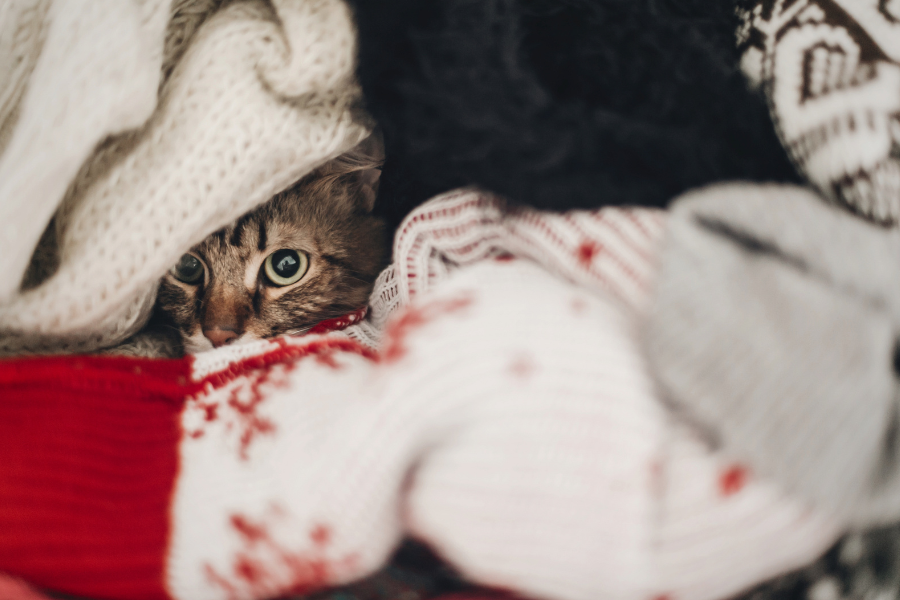
Why Do Cats Hide?
Hiding is a natural behaviour for cats.
Unlike dogs, cats often seek enclosed, quiet spaces where they feel protected. In the wild, these hiding spots provide security from predators while also creating safe places to rest and recover.
Domestic cats still retain many of these instincts.
Common reasons cats hide include:
- Rest and relaxation
- Staying warm
- Feeling safe
- Avoiding noise or activity
- Recovering after exercise
- Observing their surroundings
For many cats, hiding is simply part of being a cat.
Pet-n-Sur's guide to cat behaviour explores many of the fascinating habits cats display every day.
Why Is My Cat Hiding More in Winter?
One of the biggest reasons cats hide more during winter is simple—they're looking for warmth.
Cats generally prefer warmer temperatures than humans, and cooler weather often encourages them to seek insulated, sheltered places around the home.
Common winter hiding spots include:
- Under blankets
- Inside wardrobes
- Under beds
- On top of hot water cupboards
- Near heaters
- Sunny windowsills
Alongside hiding more often, many cats also sleep for longer during winter.
This combination of extra rest and cosy hiding places is usually a normal seasonal adjustment.
You can learn more about cat sleeping habits here.
And discover more about understanding your cat's sleep patterns here.
Seasonal Changes Can Affect Behaviour
Winter doesn't only bring colder temperatures—it can also change your cat's daily routine.
Shorter daylight hours, less outdoor activity and quieter households may all influence behaviour.
Some cats become:
- More relaxed
- Less active
- More affectionate
- More interested in sleeping
- More likely to seek enclosed spaces
Others may appear slightly quieter simply because they're conserving energy during colder weather.
These changes are generally gradual rather than sudden.
When Is Hiding Normal?
In most cases, occasional hiding isn't a cause for concern.
Normal hiding behaviour often looks like this:
- Your cat still eats normally.
- They come out for meals and interaction.
- They use the litter tray as usual.
- They respond when called.
- They still enjoy playtime, even if it's shorter than usual.
Many cats simply choose a different favourite resting place during winter.
Pet-n-Sur's guide to keeping your cat safe and warm during winter includes additional tips for helping cats stay comfortable in colder weather.
When Could Hiding Be a Sign Something Is Wrong?
If you're asking yourself, why is my cat hiding all of a sudden, it's worth paying attention to any other changes that occur alongside the behaviour.
Sudden or excessive hiding can sometimes indicate:
- Pain or injury
- Illness
- Stress
- Anxiety
- Changes in the household
- Underlying medical conditions
Rather than focusing on hiding alone, consider whether other behaviours have changed as well.
Signs to Watch For
A cat that is hiding because of illness will often show additional symptoms.
These may include:
- Loss of appetite
- Drinking significantly more or less
- Weight loss
- Vomiting
- Diarrhoea
- Difficulty moving
- Changes in grooming
- Unusual vocalisation
- Lethargy
- Breathing changes
If your cat remains hidden for long periods and shows any of these signs, it's a good idea to arrange a veterinary examination.
Stress Can Also Lead to Cat Hiding Behaviour
Not all hiding is related to physical illness.
Cats are sensitive to changes in their environment, and stress can also influence behaviour.
Possible triggers include:
- Moving house
- New pets
- Visitors
- Home renovations
- Changes to routine
- Loud noises
Even small changes can affect some cats, particularly those with naturally cautious personalities.
Understanding your cat's individual temperament can help explain why some cats adapt quickly while others need more time.
Learn more about cat personality types here.
You may also enjoy reading about other strange cat behaviours that are actually quite normal.
Helping Your Cat Feel Comfortable During Winter
Supporting your cat during winter doesn't usually require major changes.
Simple steps can help them stay warm and relaxed:
- Provide warm bedding.
- Keep sleeping areas dry.
- Offer quiet places to rest.
- Ensure fresh water is always available.
- Continue regular play sessions.
- Maintain a consistent routine.
Even indoor cats benefit from gentle daily enrichment to keep both body and mind active during colder months.
Keep an Eye on Your Cat's Health
Because cats naturally hide discomfort, regular observation is important throughout the year.
Simple health checks at home can help you notice changes before they become more serious.
Look for changes in:
- Appetite
- Weight
- Coat condition
- Eyes and ears
- Movement
- Energy levels
Pet-n-Sur's guide to checking your cat's health at home provides practical tips for routine monitoring.
Annual veterinary check-ups are another valuable part of preventative healthcare, even if your cat appears healthy.
Learn what to expect during your cat's annual check-up here.
Trust What You Know About Your Cat
Every cat has its own personality and routine.
Some naturally enjoy spending hours hidden away, while others are rarely out of sight.
The most important thing isn't comparing your cat with others—it's recognising changes from what is normal for your own pet.
If your cat suddenly begins hiding much more than usual, especially alongside changes in eating, movement or behaviour, it's worth seeking veterinary advice.
Early assessment can often provide reassurance or allow health concerns to be addressed before they become more serious.
Understanding Winter Behaviour Helps You Support Your Cat
If you've been wondering why do cats hide more during winter, the answer is often quite simple. Many cats naturally seek warm, quiet places to rest and may sleep more as temperatures drop.
However, sudden or excessive cat hiding behaviour should never be ignored, particularly when combined with other changes in health or behaviour.
At Pet-n-Sur, we believe understanding your cat's normal behaviour is one of the best ways to support their wellbeing. Combined with regular preventative healthcare and planning ahead for unexpected veterinary expenses, it can help your feline companion enjoy a healthy and comfortable life all year round.
Learn more about Pet-n-Sur cat insurance here.