

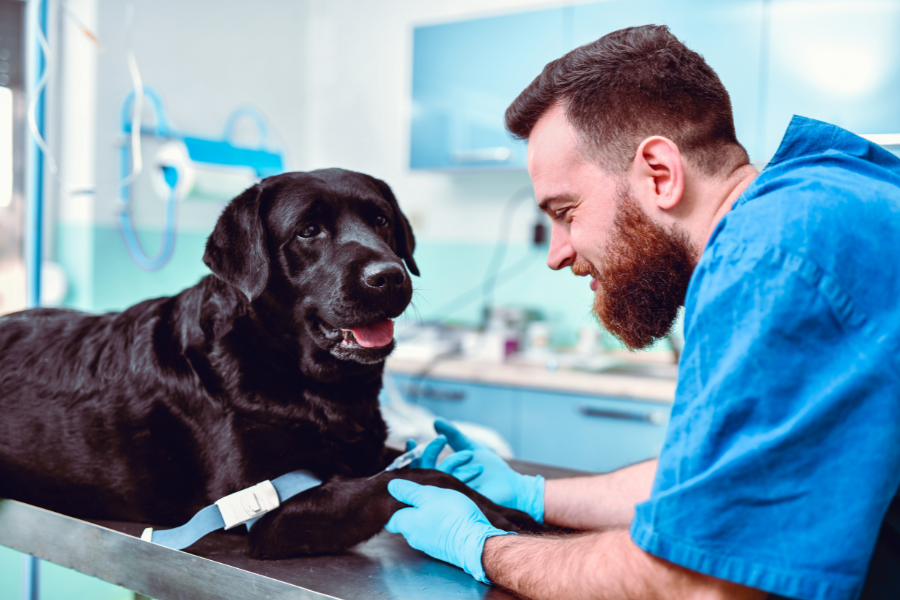
To help cut through the noise, we spoke with Dr Ebeneze Spamers, lead veterinarian at Takurua Vets in Riccarton, Christchurch, and Dr Oliver Reeve from Onewa Road Veterinary Hospital in Auckland’s Birkenhead, to explain how pet vaccinations work in New Zealand, which vaccines are considered essential, and how to make confident, informed choices for your pet.
Why Vaccinations Matter
Vaccinations protect pets from serious, sometimes life-threatening diseases that still exist in New Zealand today. It's worth remembering that vaccines are, in a sense, victims of their own success - because they work so well, some diseases can feel as though they've disappeared entirely. But that isn't the case.
"New Zealand is fortunate to be free from some diseases that are prevalent in other parts of the world, such as rabies," explains Dr Spamers. "However, that does not mean infectious disease is uncommon. Serious illnesses like Canine Parvovirus remain prevalent and often occur in clusters, particularly in areas with lower vaccination coverage."
Dr Reeve echoes this point, noting that Parvovirus can survive in New Zealand soil for years, meaning unvaccinated dogs remain at risk even without direct contact with an infected animal. Outbreaks continue to occur regularly in undervaccinated communities.
"Many diseases feel 'rare' because vaccination has kept them under control," adds Dr Spamers. "Vaccination protects the individual pet and contributes to herd immunity within the wider population, indirectly protecting those who are too young, elderly, or medically unable to be vaccinated."
Vaccinating your pet therefore protects not only your own dog or cat, but also the wider pet community across Aotearoa.
Core vs Non-Core Vaccinations: What's the Difference?
One of the biggest concerns pet owners have is whether their pet truly needs every available vaccine. Both vets are clear that vaccination is not a blanket protocol.
"The vaccines your pet needs depend on their age, lifestyle, and where they live or travel within New Zealand," says Dr Spamers. "All dogs and cats are generally recommended to receive core vaccines that protect against severe, widespread infectious diseases. Beyond that, additional vaccines may be advised based on factors such as boarding, daycare attendance, travel between islands, wildlife exposure, or living in multi-pet households."
Dr Reeve describes core vaccines as those essential for all pets regardless of lifestyle, while non-core vaccines are determined by individual risk factors - where a pet lives, how they spend their time, and what they're exposed to. Understanding this distinction helps pet owners feel confident that recommendations are based on genuine medical reasoning.
"The decision is made in discussion with pet owners and individual risk assessment rather than a one-size-fits-all approach," says Dr Spamers.
Core Vaccines for Dogs
Core vaccines are recommended for nearly all dogs in New Zealand, protecting against three serious viruses: Canine Parvovirus, Canine Distemper Virus, and Canine Adenovirus (Hepatitis).
Parvovirus is highly contagious and potentially fatal, especially in puppies, causing severe vomiting, diarrhoea and dehydration that often requires intensive hospital treatment. Distemper affects the respiratory, gastrointestinal and nervous systems and can lead to long-term neurological damage. Adenovirus affects the liver and other organs and can spread through bodily fluids.
Dr Reeve also highlights that in many parts of New Zealand, Leptospirosis vaccination should be considered a core vaccine as well, not just a lifestyle recommendation. Leptospirosis is a bacterial disease spread through contaminated water, soil or contact with livestock and wildlife. It can cause kidney and liver failure and, importantly, some strains can infect humans.
Non-Core Vaccines for Dogs
Beyond core protection, additional vaccines may be recommended depending on a dog's lifestyle and location.
“For example, leptospirosis vaccination may be advised for dogs travelling to higher-risk regions of the North Island or northern parts of the South Island,” says Dr Spamers.
Leptospirosis is a bacterial disease spread through contaminated water, soil or contact with livestock and wildlife. It can cause kidney and liver failure and, importantly, some strains can infect humans.
“While kennel cough vaccination is often recommended for dogs attending doggy daycares or boarding facilities," adds Dr Spamers.
Dr Reeve notes that this also applies to dogs visiting groomers or anywhere they mix closely with other dogs. While kennel cough is often not life-threatening, it can be distressing and persistent.
Some vaccines, such as canine coronavirus, are typically only recommended in specific circumstances.
Core Vaccines for Cats
Core vaccines are recommended for almost all cats, covering three key diseases. "Core vaccines for cats protect against Feline Panleukopenia Virus, Feline Herpesvirus, and Feline Calicivirus," says Dr Spamers.
Feline Panleukopenia is a severe and often fatal disease causing vomiting, diarrhoea and immune suppression. Feline Herpesvirus and Feline Calicivirus are major causes of upper respiratory disease, particularly in kittens and multi-cat households. Vaccination significantly reduces both severity and spread.
Non-Core Vaccines for Cats
Lifestyle plays an important role in determining whether additional vaccines are recommended, which is best discussed with a veterinarian.
However, Dr Spamers notes an important update for New Zealand pet owners:
“For cats, it is also important to note that vaccines for feline leukaemia virus (FeLV) and feline immunodeficiency virus (FIV) are currently no longer available in New Zealand.
“While both diseases are still diagnosed in our cat population, prevention relies on lifestyle management (such as desexing, keeping them indoors - particularly at night to prevent fighting), testing, and limiting exposure rather than vaccination.”
This makes management strategies such as desexing and limiting roaming particularly important for cats at higher risk of exposure.
How Often Does Your Pet Need Vaccinations?
Vaccination schedules differ between puppies, kittens and adult pets, and understanding why helps make the process less daunting.
"Both puppies and kittens require an initial series of core vaccinations, followed by an adolescent booster at around six months," says Dr Spamers. Dr Reeve explains that boosters are typically given at 8, 12, and 16 weeks because the antibodies passed through their mother's milk can interfere with early vaccines - meaning the timing of each dose matters as much as the dose itself.
Once the initial series and first-year booster are complete, the schedule becomes less intensive. "Many core vaccines can be administered at three-year intervals after the initial course," explains Dr Spamers. However, as Dr Reeve points out, some vaccines - including kennel cough and leptospirosis - generally require an annual top-up to maintain effective protection.
Your veterinarian will advise the appropriate schedule based on your pet's health, lifestyle and risk exposure.
Common Vaccination Questions
Does my indoor cat still need vaccines? Yes. Even indoor cats can be exposed to disease through visitors, other animals or accidental escapes.
Can my pet get sick from vaccines? Most pets experience no side effects. Mild lethargy or tenderness at the injection site may occur briefly. Serious reactions are rare.
What happens if my pet misses a vaccine? Your vet can create a safe catch-up plan. Missing a booster does not automatically mean starting the entire course again.
Can vaccines help prevent emergency vet bills? Absolutely. Preventing severe infectious disease is significantly less costly, both financially and emotionally, than treating it after infection.
Final Thoughts
Vaccinations are about protection, prevention and peace of mind. While core vaccines are essential for nearly all pets, non-core vaccines allow your vet to tailor a plan that suits your pet's individual lifestyle and risk profile.
As Dr Spamers emphasises, "vaccination should be tailored to the individual pet rather than applied as a blanket protocol" - a view Dr Reeve firmly shares. The best approach is an open conversation with your veterinarian, who can guide you using current science, practical experience and an understanding of your pet's specific needs.
Keeping vaccinations up to date gives your pet the best possible chance at a long, healthy life - and helps protect New Zealand's wider pet community at the same time.