
Why Moving Can Be Stressful for Dogs
Dogs don’t understand the concept of moving house the way humans do. From their perspective, their safe and familiar environment suddenly changes without warning.
During a move, dogs may experience:
- Changes in routine
- Increased household activity and noise
- Strange people entering the home
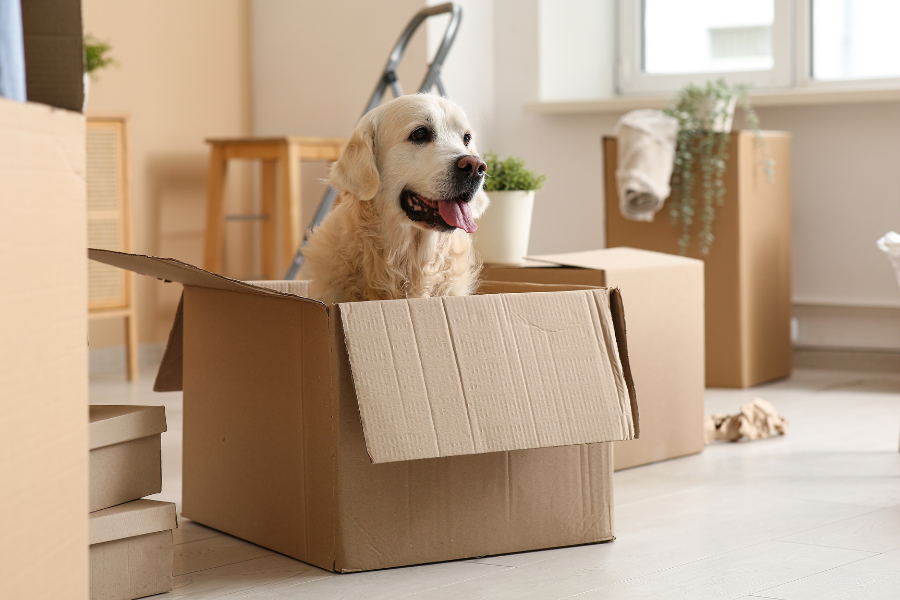
- Packing materials and disappearing furniture
- Long car trips or transport stress
- New smells, neighbours and surroundings
This uncertainty can sometimes lead to stress-related behaviours such as:
- Pacing or restlessness
- Excessive barking or whining
- Clinginess
- Hiding
- Reduced appetite
- Toileting accidents
- Chewing or destructive behaviour
- Difficulty settling
These reactions are common and usually temporary. However, recognising anxiety early can help prevent it from escalating.
If you’re unsure whether your dog may be stressed, Pet-n-Sur’s guide to anxiety signs in dogs offers helpful information about what to look for
Before the Move: Preparing Your Dog
Preparation is one of the most effective ways to reduce stress when moving with a dog. Small steps taken early can help your pet feel safer and more secure during the transition.
Maintain Familiar Routines
Dogs feel more confident when their daily routine stays predictable. In the weeks leading up to the move, try to keep:
- Feeding times consistent
- Walk schedules regular
- Bedtime routines unchanged
- Exercise and playtime normal
Even if packing becomes hectic, maintaining routine helps reassure your dog that their world is still stable.
Create a Safe Space
Packing boxes, moving furniture and increased activity can make some dogs nervous. Set aside a quiet area where your dog can relax away from the chaos.
Include familiar items such as:
- Their bed
- Favourite toys
- Water bowl
- Blankets carrying familiar scents
Giving your dog a calm retreat can help lower stress levels during the busiest parts of the move.
Update Identification Details
Before moving house with a dog, ensure all identification information is current.
Check that:
- Microchip details are updated
- Collar tags include your current phone number
- Registration details reflect your new address
Moves can increase the risk of pets becoming disoriented or escaping. Updated contact information greatly improves the chances of a safe return if your dog gets lost.
Pet-n-Sur’s lost dogs awareness blog contains additional tips for preventing and responding to lost pet situations
Prepare for Travel
If your move involves a long drive, planning ahead can reduce travel-related stress.
Helpful preparation includes:
- Taking shorter practice car trips beforehand
- Using a secure crate or dog seat restraint
- Packing water, food and medications
- Scheduling rest breaks on longer journeys
- Avoiding feeding immediately before travel if your dog gets carsick
For more travel preparation advice, read:
https://www.petnsur.co.nz/blog/preparing-your-dog-for-a-road-trip/
Moving Day: Keeping Stress Levels Low
Moving day itself is often the most chaotic part of the process. Trucks, open doors, unfamiliar people and noise can easily overwhelm dogs.
Keep Your Dog Somewhere Safe
Many owners find it helpful to keep their dog:
- With a trusted friend or family member
- At doggy daycare
- In a quiet secured room away from movers
This helps prevent escape risks while also reducing overstimulation.
If your dog stays with you during the move, try to maintain access to their familiar belongings and provide regular reassurance throughout the day.
Avoid Sudden Changes
Even though the environment is changing quickly, your interactions with your dog should stay calm and consistent.
Speak gently, stick to familiar commands and avoid punishing anxious behaviour. Dogs often look to their owners for cues about whether a situation is safe.
Watch for Signs of Stress
Some dogs cope quietly while others show more obvious signs of anxiety.
Pay attention to behaviours such as:
- Trembling
- Heavy panting
- Refusing food
- Excessive licking
- Hiding
- Vocalising more than usual
Observation is important. The earlier stress is recognised, the easier it is to support your dog before behaviours worsen.
After the Move: Helping Your Dog Settle In
Once you arrive at your new home, your dog may initially feel confused or uncertain. New environments take time to learn and trust.
The adjustment period can vary from a few days to several weeks depending on the dog’s personality, age and previous experiences.
Introduce the New Home Gradually
Rather than giving your dog unrestricted access immediately, start slowly.
Allow them to explore:
- One room at a time
- Familiar sleeping areas first
- Outdoor spaces under supervision
Keeping familiar scents nearby can help the house feel safer and more recognisable.
Re-Establish Routine Quickly
Routine is one of the strongest tools for helping dogs feel secure after a move.
Try to resume normal:
- Feeding times
- Walks
- Toilet breaks
- Play sessions
- Sleep schedules
Consistency helps your dog understand that although the environment changed, their daily life remains stable.
Provide Mental and Physical Stimulation
Exercise and enrichment can help reduce anxiety and prevent boredom-related behaviours.
Appropriate activities may include:
- Daily walks
- Puzzle toys
- Basic training sessions
- Gentle play
- Sniffing activities
Regular mental stimulation helps many dogs settle faster into unfamiliar surroundings.
If your dog needs help rebuilding confidence, Pet-n-Sur’s guide on helping fearful dogs may be useful.
Be Patient With Behaviour Changes
Temporary behavioural setbacks are common after moving with a dog.
Your dog may:
- Bark more than usual
- Become clingy
- Have accidents indoors
- Sleep differently
- Show mild separation anxiety
Patience is important during this adjustment period. Avoid punishment, as it can increase fear and confusion.
Instead, focus on calm reassurance, consistency and positive reinforcement.
For owners concerned about separation-related stress after moving, this article may help:
https://www.petnsur.co.nz/blog/dog-separation-anxiety-understanding-and-managing-your-dogs-distress/
When to Seek Veterinary Advice
While mild stress is common during a move, some symptoms may require professional support.
Contact your veterinarian if your dog experiences:
- Persistent refusal to eat
- Ongoing vomiting or diarrhoea
- Severe anxiety
- Self-harming behaviours
- Aggression
- Extreme lethargy
- Sudden health changes
Stress can sometimes contribute to underlying health issues becoming more noticeable, particularly in older dogs or pets with existing medical conditions.
Understanding common dog health concerns can help owners recognise when something may need further attention.
Training Can Help Build Confidence
Training isn’t just about obedience — it also helps dogs feel safer and more confident in unfamiliar environments.
Simple reinforcement of familiar commands such as:
- Sit
- Stay
- Come
- Place
can provide structure and reassurance during a stressful transition.
Short, positive sessions are often most effective while your dog adjusts to the new environment.
For more guidance, visit:
https://www.petnsur.co.nz/blog/basic-tips-for-training-your-dog/
Preventative Care Matters During Big Life Changes
Moving house with a dog is a major life event, and preparation plays a huge role in reducing stress and preventing problems before they escalate.
Preventative care includes:
- Maintaining routine
- Monitoring behaviour changes
- Keeping identification updated
- Supporting mental wellbeing
- Seeking help early when needed
Even with careful planning, unexpected accidents, illnesses or behavioural concerns can still happen during times of change. Having the right support in place can provide valuable peace of mind for pet owners navigating stressful transitions.
Pet-n-Sur’s dog insurance helps Kiwi pet owners prepare for the unexpected, so they can focus on supporting their dog’s wellbeing during every stage of life.
Final Thoughts
Moving with a dog can be challenging, but stress during a house move is both common and manageable. Most dogs adjust successfully when given time, patience and consistency.
By preparing early, maintaining familiar routines and carefully observing your dog’s behaviour, you can help create a calmer and more positive transition into your new home.
Every dog adapts differently. Some settle within days, while others need a little longer to build confidence in unfamiliar surroundings. Staying supportive, calm and proactive can make a significant difference to your dog’s comfort and wellbeing throughout the process.