What Is a Raw Food Diet for Cats?
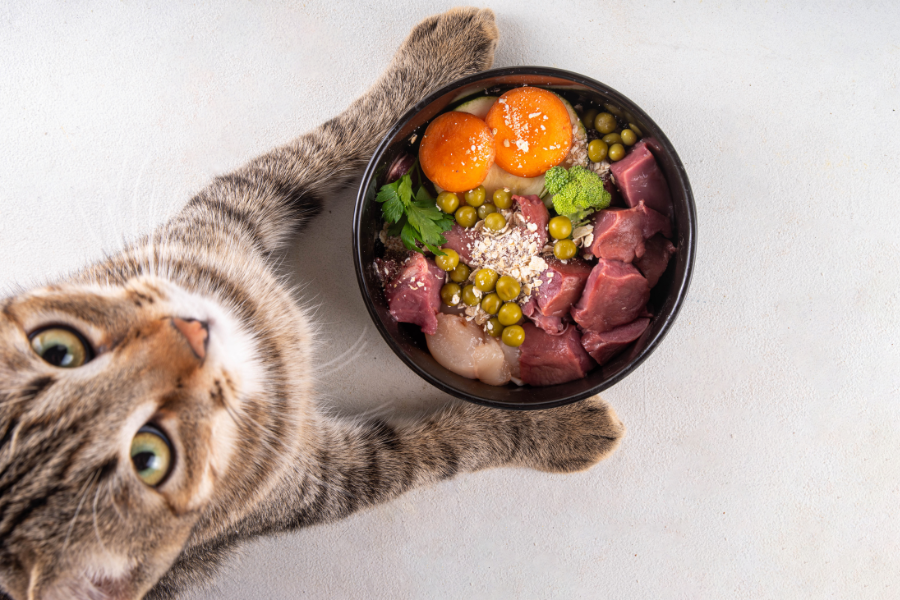
A raw food diet for cats typically includes uncooked meats, organs, bones, and sometimes eggs or small amounts of vegetables. It’s designed to resemble what wild cats might eat — think prey-based nutrition rather than processed kibble.
Common ingredients include:
- Raw chicken for cats (muscle meat and sometimes bone)
- Beef, lamb, or rabbit
- Organ meats like liver, kidney, and heart
- Eggs (occasionally raw or lightly cooked)
Some owners prepare these diets at home, while others buy commercial raw pet food for cats that claims to meet nutritional guidelines.
But before switching, it’s crucial to understand both the potential benefits and risks.
The Claimed Benefits of Raw Food for Cats
Supporters of feeding raw food to cats often point to these potential advantages:
1. Improved Coat and Skin Health
Raw diets are naturally high in protein and essential fatty acids, which may enhance coat shine and reduce dandruff. Cats consuming real food for cats — especially diets including omega-rich meats like salmon or lamb — often show visibly glossier fur.
2. Better Digestion and Smaller Stools
Without the fillers and carbohydrates found in processed kibble, raw-fed cats may produce smaller, less odorous stools. The theory is that their bodies utilize more of the nutrients present in natural meat-based diets.
3. Dental Health
Gnawing on raw bones and chewy meat can help scrape away plaque, supporting dental hygiene. For a closer look at how diet impacts oral health, visit The Importance of Dental Care for Your Pet.
4. Weight Management
Some owners claim that a raw food diet for cat weight loss helps reduce obesity due to higher protein content and fewer empty calories. Active cats on well-balanced raw diets may build lean muscle while maintaining energy levels.
5. Behavioural and Energy Benefits
Proponents say cats on raw diets exhibit more natural hunting and chewing behaviour, with improved focus and vitality. You can learn more about how diet influences feline behaviour in Why Do Cats Sleep So Much?
The Risks of Feeding Raw Food to Cats
While the potential benefits of feeding cats a raw diet sound appealing, it’s equally important to weigh the drawbacks — especially when it comes to safety and nutrition.
1. Bacterial Contamination
Raw meat can harbour harmful pathogens such as Salmonella, E. coli, and Listeria. These bacteria don’t just threaten your cat — they can also pose risks to humans, especially children, the elderly, or immunocompromised family members.
Even commercially prepared raw pet food for cats can test positive for bacteria if not properly handled. Safe food hygiene practices — washing surfaces, freezing meat, and avoiding cross-contamination — are essential.
2. Nutritional Imbalance
Cats are obligate carnivores and require specific nutrients like taurine, calcium, and vitamin A in precise amounts. Homemade raw meat cats can eat may lack these unless carefully formulated. Deficiencies can lead to serious long-term health problems such as heart disease, bone weakness, or blindness.
3. Bone Hazards
While small, raw bones can help dental health, they can also cause choking or gastrointestinal obstruction if not properly prepared. Cooked bones, in particular, splinter easily and should never be fed to cats.
4. Parasites and Spoilage
Improper storage or handling of raw meats can lead to parasite transmission or spoilage. Cats are not immune to foodborne illnesses, and symptoms like vomiting, diarrhoea, or lethargy can indicate infection.
5. Allergic or Digestive Reactions
Even natural ingredients can trigger sensitivities. Cats with known allergies or sensitive stomachs may experience digestive upset during dietary transitions.
What Do Vets Think About Raw Feeding?
Most veterinarians take a cautious, evidence-based approach. While they acknowledge that cats are carnivorous and thrive on protein, many express concerns about the safety and nutritional completeness of raw diets.
A 2023 statement from the New Zealand Veterinary Association (NZVA) advised pet owners to “consult a veterinary nutritionist before introducing raw foods” and to “consider risks of microbial contamination.”
Veterinary professionals generally recommend the following:
- Choose commercial raw food that meets AAFCO or FEDIAF nutritional standards.
- Avoid raw diets for kittens, senior cats, or immunocompromised pets.
- Maintain strict hygiene when handling raw meat.
- Schedule routine vet checks to monitor weight, digestion, and nutrient balance.
At Pet-n-Sur, we echo this cautious optimism. If you’re curious about raw feeding, it’s best to discuss your plan with your vet and ensure your cat’s overall wellbeing is protected — nutritionally and financially.
Balancing Raw and Cooked Diets
For owners seeking a middle ground, some vets suggest a partial raw feeding approach — blending small amounts of raw protein with a balanced commercial diet.
This method lets cats enjoy the texture and taste of raw food cats love, while still ensuring they get all essential nutrients safely.
Others prefer lightly cooked “real food for cats” — which can destroy bacteria while maintaining a natural nutrient profile.
Whatever approach you choose, regular health checks are essential. Learn more about maintaining balance and health through Preventative Pet Care.
Is Raw Cat Food Safe?
So, is raw cat food safe? The answer depends on how it’s prepared and handled.
Raw feeding may be safe if you:
- Use human-grade meats.
- Freeze portions to kill parasites.
- Follow veterinary-formulated recipes.
- Clean and sanitize all preparation areas.
Raw feeding may be unsafe if you:
- Use low-quality or expired meats.
- Skip supplements or essential nutrients.
- Don’t monitor for weight loss or nutrient deficiencies.
- Have multiple pets or small children at home (higher cross-contamination risk).
Every cat is unique — some thrive on raw diets, while others struggle with digestion or nutrient absorption. If you’re exploring feeding raw food to cats, make changes gradually, track your cat’s energy, weight, and stool quality, and always consult your vet if you notice anything unusual.
The Role of Pet Insurance in Dietary Experiments
Even with the best intentions, dietary transitions can sometimes cause unexpected reactions — from digestive upset to bacterial infections.
Having reliable cat insurance gives you the confidence to make informed choices without financial fear. With Pet-n-Sur Cat Insurance, you’ll have cover for:
- Vet consultations related to diet changes or allergies.
- Diagnostic tests for gastrointestinal or metabolic issues.
- Emergency care if your cat becomes ill after dietary exposure.
We’re not here to tell you what to feed your cat — but to ensure that whatever you choose, your feline friend is protected from the unexpected.
Key Takeaway
Raw feeding can offer both potential rewards and significant risks. Advocates highlight the benefits of raw food for cats, including improved coat, digestion, and weight management. Critics emphasize hygiene, safety, and nutritional completeness.
The safest path forward is balance: consult your vet, choose quality ingredients, and always prioritize health monitoring.
If you decide to experiment with raw pet food for cats, remember — Pet-n-Sur is here to help you handle any bumps along the way.
Protect your feline friend with Cat Insurance — cover for diet-related illness or emergencies — so you can focus on your cat’s wellbeing, not the vet bills.
Always consult your veterinarian before making major dietary changes. Pet-n-Sur — supporting responsible care, whatever you choose to feed your cat.